
We will give three oral presentations at the 2026 Summer Conference of the Digital Games Research Association JAPAN (DiGRA JAPAN), held September 11–12 at the Hachioji Campus of Tokyo University of Technology.
Evaluating Imperceptible Control Assistance for Joystick Input
Presenters: Taichiro Yui, Kentaro Fukuchi
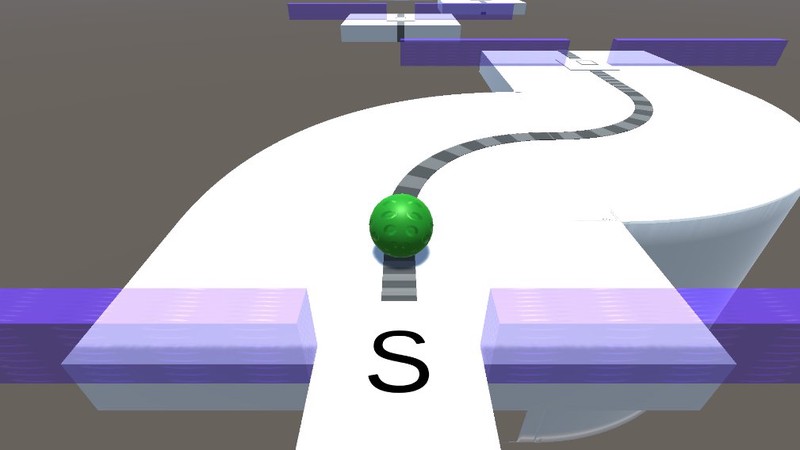
We propose a control assistance method that unobtrusively supports novice players without being noticed. In an experiment using a driving task controlled with an analog stick, we confirmed that, compared with assistance that is applied at all times, the proposed method improved driving accuracy while being less perceptible. A questionnaire also suggested that, although many participants felt uncomfortable about learning of the assistance after the fact, they would nonetheless like to use it when playing a game for the first time.
Expanding the Exercises on Coordinated Multi-Parameter Tuning in JumpLab 2D: An Interactive Learning Tool for Parameter Tuning in 2D Jump Games
Presenters: Kentaro Fukuchi, Keita Yamazaki
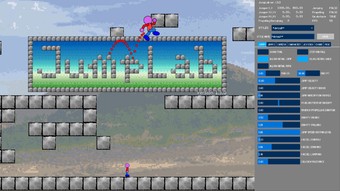
We added new exercises to “JumpLab 2D,” a learning tool that lets users interactively explore, in a web browser, how to tune the parameters of the three Cs (character, camera, and control) that are central to game development. In the earlier version, learners working on exercises that required tuning multiple parameters together often tried only some of the parameters before finishing. The new exercises have learners adjust several related parameters step by step, so that they notice how the individual settings affect one another as they learn. We also report observations and feedback obtained through a demonstration at an international conference.

Extending JumpLab3D, an Interactive Learning Tool for Camera System Design in Game Development, with Adjustable Player-Character Appearance and Behavior Parameters
Presenters: Koki Kitano, Masayoshi Itoh, Kentaro Fukuchi
“JumpLab3D” is an interactive learning tool for beginners in game development that teaches camera system design through parameter tuning and playtesting of a 3D platform game. In this work we extended it so that, among the three Cs (character, camera, and control) that are central to game development, the character and control aspects—which had not been covered sufficiently—can also be adjusted. We further added parameters related to the stage, extending the tool so that learners can study the relationship between each of the three Cs and level design while observing the results of their adjustments.
Publications
- Report: “Evaluating Imperceptible Control Assistance for Joystick Input” Taichiro Yui, Kentaro Fukuchi, Proc. of Summer Conference, DiGRA JAPAN. (2026) — 🏆Student Conference Award
- Report: “Expanding the Exercises on Coordinated Multi-Parameter Tuning in JumpLab 2D: An Interactive Learning Tool for Parameter Tuning in 2D Jump Games” Kentaro Fukuchi, Keita Yamazaki, Proc. of Summer Conference, DiGRA JAPAN. (2026)
- Report: “Extending JumpLab3D, an Interactive Learning Tool for Camera System Design in Game Development, with Adjustable Player-Character Appearance and Behavior Parameters” Koki Kitano, Masayoshi Itoh, Kentaro Fukuchi, Proc. of Summer Conference, DiGRA JAPAN. (2026)