
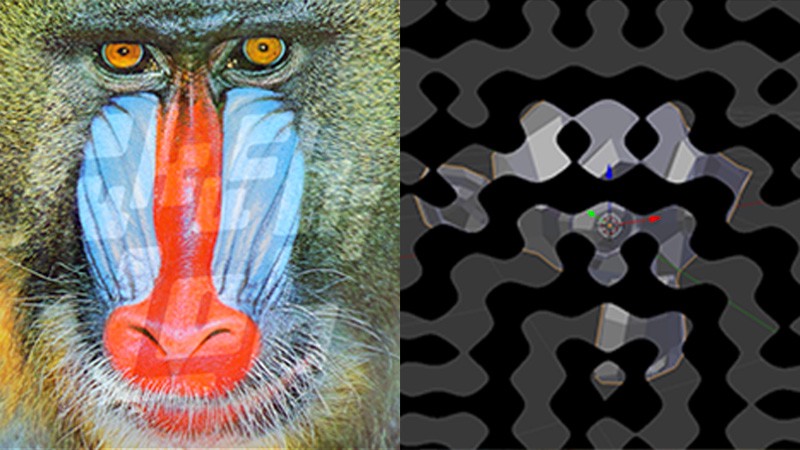
In theatrical performances and events that use stereoscopic imagery, audiences can share an unusual visual experience by wearing special glasses. However, instructions to put the glasses on or take them off are typically delivered through announcements or subtitles, leaving these actions underused as part of the performance itself, rather than as a way to draw the audience into active immersion.
In this research, we developed two techniques, latent imaging and image scrambling, by applying binocular rivalry, a visual phenomenon in which what a person perceives changes depending on the different stimuli presented to the left and right eyes. With these techniques, an image invisible to the naked eye can become visible once the glasses are worn, or conversely, an image can become hard to make out while the glasses are on. Through this, we aimed to turn the simple act of putting on or removing stereoscopic glasses into an interaction through which the audience actively engages with the imagery.
These techniques let the acts of putting on the glasses to view stereoscopic imagery, and taking them off when the presentation ends, carry theatrical meaning. Discovering a hidden image the instant the glasses go on can make the audience feel they are engaging with the stage of their own accord. Conversely, when image scrambling renders the imagery hard to see, removing the glasses becomes a cue for returning from the theatrical space to everyday life. We expect these techniques to find use in stage productions, puzzle-solving events, attractions, and similar experiences.
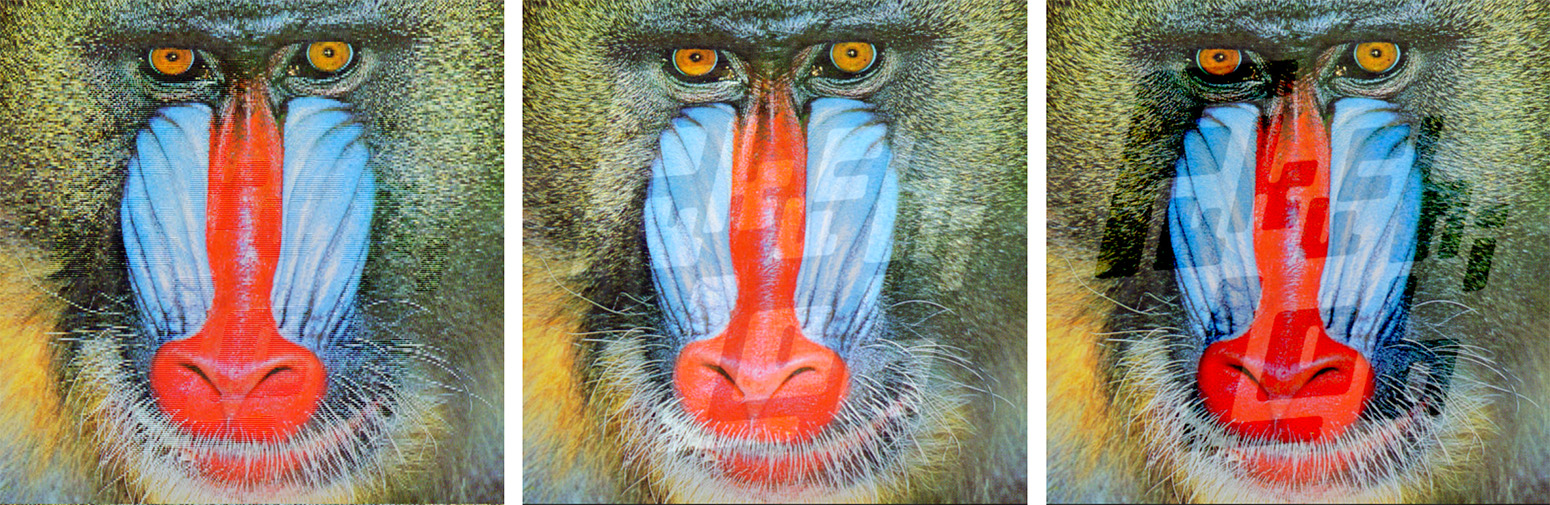
Example of latent imaging. From left to right: the displayed image viewed with the naked eye, the image for the left eye, and the image for the right eye. When the glasses are worn, the text ‘Fukuchi Lab,’ embedded as a latent image, becomes perceptible.
With latent imaging, stereoscopic glasses deliver different images to the left and right eyes. Binocular rivalry emphasizes the latent portion, causing images or text that were invisible to the naked eye to emerge and become perceptible.
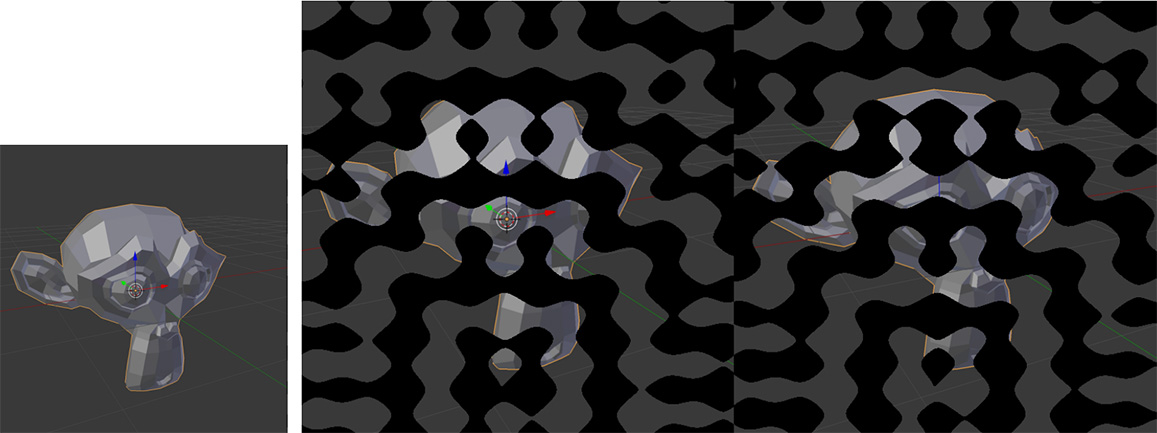
Example of image scrambling. The original image is shown on the left, and the scrambled display image divided between the left and right eyes is shown on the right. It appears as the original image to the naked eye but becomes difficult to interpret when the glasses are worn.
With image scrambling, fragments of an image are delivered separately to the left and right eyes when the glasses are worn. The two images therefore do not fuse, and binocular rivalry makes the viewer’s perception unstable, making the original image or text difficult to discern.